
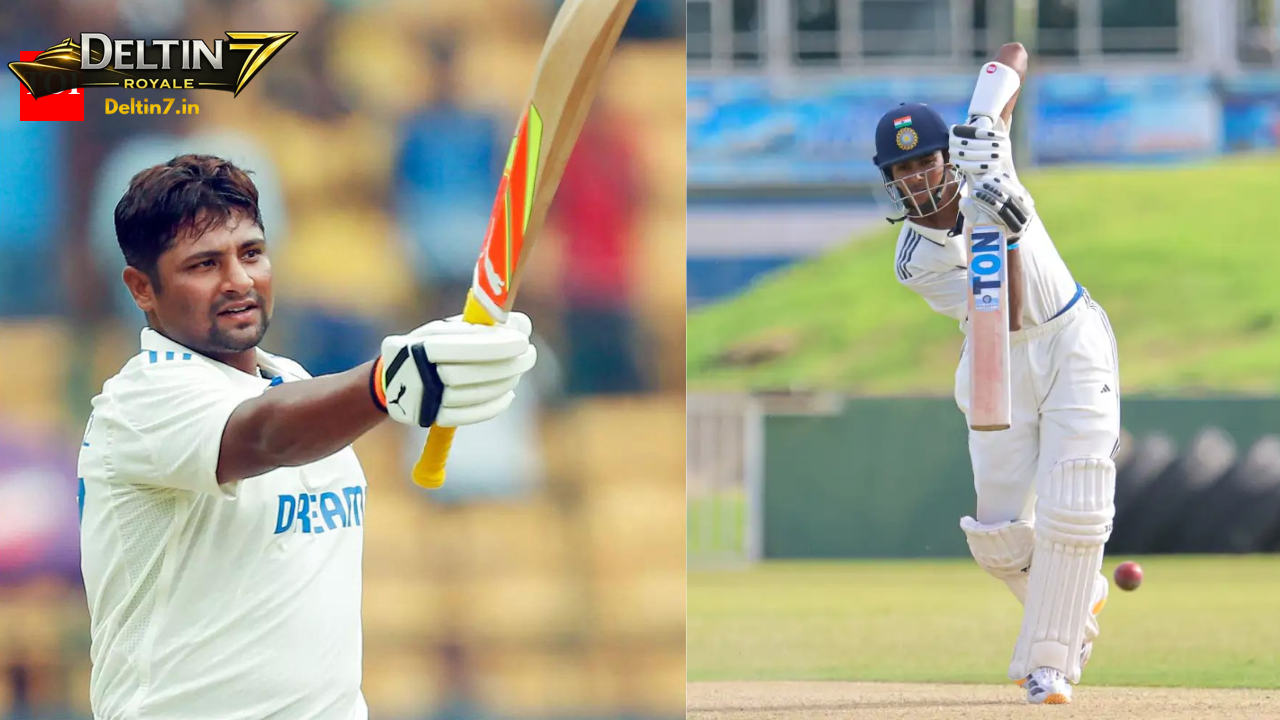
Context of Sudharsan’s Injury
India’s highly anticipated Test series in Sri Lanka has encountered a setback with promising opener Sai Sudharsan suffering a foot niggle. Although the injury is not career-threatening, it ruled out the youngster from the upcoming two-match Test tour. The All-India Senior Selection Committee and the BCCI’s cricket operations team examined medical reports before concluding that Sudharsan’s return would be risky on turning tracks in Sri Lanka.
This unexpected vacancy at the top of the batting order has sparked a selection debate. Two names have risen to the forefront: Sarfaraz Khan, the stylish Mumbai middle-order batsman, and Shaik Rasheed, the emerging talent who impressed during a recent India A stint. Both present contrasting strengths and are eager to stake their claim in India’s long-format plans.
Profiles: Sarfaraz Khan and Shaik Rasheed
Sarfaraz Khan has long been on the cusp of Test selection thanks to prolific performances in domestic cricket. A versatile left-hander, he has dominated the Ranji Trophy over multiple seasons, known for his solid defence and ability to accelerate when required. His technique against spin bowling, honed on sluggish Indian pitches, makes him an attractive option for Sri Lanka’s turning tracks.
On the other hand, Shaik Rasheed represents the new wave of youth. The 20-year-old made headlines with his aggressive strokeplay for India A, posting big scores on seaming surfaces in England and spin-friendly conditions at home. His fearless approach and quick adaptation to different match situations have drawn praise from the Centre of Excellence (CoE), which oversees national team development.
Edge from India A Experience
While both players bring proven records, Rasheed’s recent red-ball exposure with India A could tip the scales. In his India A outings, he consistently delivered under pressure and received glowing feedback from coaches at the National Cricket Academy. Analysts believe that performing in a quasi-international environment lends greater readiness for actual Test duties.
Sarfaraz, however, offers a wealth of first-class experience, having compiled over 4,000 runs including several double hundreds. His ability to build long innings and shepherd the tail remains unmatched among contenders. With veteran batsmen nearing the twilight of their careers, selectors view Sarfaraz as a potential mainstay in the middle order.
Balance and Team Composition
The selection panel faces a crucial decision on team balance. Should they opt for Rasheed’s vivacity to inject match excitement at the top, or Sarfaraz’s solidity to anchor the innings? India’s traditional approach to subcontinent Tests leans toward technique and patience, which favors Sarfaraz’s style. Yet, evolving dynamics and calls for dynamic batting could work in Rasheed’s favour.
Moreover, leadership and temperament under foreign conditions will be key. Both players have captained age-group sides, but handling the unique pressures of Test cricket against a strong Lankan spin attack presents a fresh challenge.
What Lies Ahead for India
With training underway and the Sri Lanka series fast approaching, the BCCI is expected to announce the replacement soon. Fans and cricket pundits will watch closely for this strategic choice, as it could signal India’s batting blueprint for the next few years. Whichever player earns the call, the opportunity to shine on the international stage promises to be a rewarding milestone.
Ultimately, the decision between Sarfaraz Khan and Shaik Rasheed underscores India’s emphasis on youth development balanced with proven track records. As the squad prepares for spin-friendly pitches and humid conditions, India will count on its chosen batsman to deliver consistent performances and strengthen its reputation in Asian conditions.