
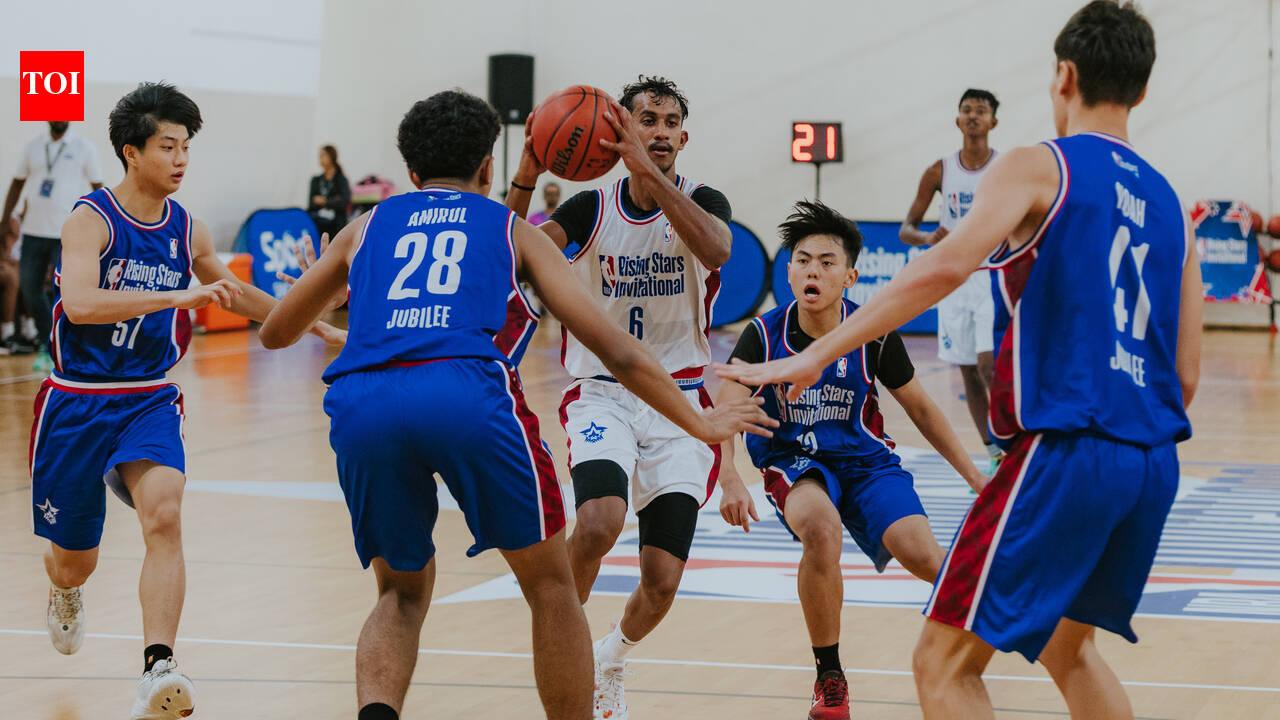
When Chennai’s Velammal International School team touched down in Singapore for the NBA Rising Stars Invitational, they carried more than just a ball. They brought the hopes of a nation still seeking its breakthrough on the Asian basketball stage. While the scoreboard showed defeats, the experience lit a spark that could fuel Indian basketball for years to come.
A Reality Check in Singapore
Facing some of Asia’s top prep-school programs, the young Indians discovered first-hand the intensity and pace that define elite youth basketball overseas. The results were lopsided, but each game offered hard truths on defensive rotations, court spacing and the speed of transition play. In an arena filled with roaring crowds and match excitement, Velammal’s players quickly realised that skill alone wouldn’t suffice; tactical discipline and physical conditioning would be equally vital.
Coach Shamsher Basha, leading the charge, viewed the losses not as failures but as lessons in contrast. “This is our benchmark now,” he commented. “If we want to compete with the best in Asia and beyond, we must embrace higher training standards, smarter game plans and the mental toughness these kids are showcasing.”
Dreams Take Flight
Amid the stinging defeats, personal dreams took centre stage. Point guard Aadhav Kumar, known for his quick first step, admitted he still sleeps with visions of the NBA. “I know the gap is huge, but I’m ready to work every day to narrow it,” he said. His teammate, center Rohan Deshpande, has even loftier aspirations: an Olympic medal. “If we can start by giving 110% in every practice, who knows where this journey leads?” he reflected.
The young squad’s ambition sparked conversations back home about talent pipelines, grassroots programmes and the role of professional leagues in nurturing tomorrow’s stars. As Indian basketball pursues its first major international breakthrough, these teenagers represent both the current challenge and the future promise.
Learning from Challenges
Beyond the on-court lessons, the Invitational highlighted gaps in nutrition, fitness support and scouting networks in India. While many Asian rivals benefitted from full-time training centres and regular international friendlies, the Velammal roster often balances schoolwork, family obligations and weekend tournaments. Experts point out that smarter scheduling, access to sports science and partnerships with overseas academies could accelerate progress.
Mentorship emerged as another key takeaway. Several Indian players mentioned they’d love to train alongside seasoned professionals in the Indian leagues or attend specialized camps abroad. With the right exposure and structured guidance, the belief is that more youngsters will convert dreams into tangible performance improvements.
Building the Path Ahead
Back in Chennai, the team’s return was met with warm cheers and renewed optimism. Local basketball associations see the Singapore journey as a template for future tours, enabling more squads to gain international exposure. Meanwhile, sponsors and online entertainment platforms have shown interest in supporting clinics, tournaments and youth outreach programmes.
For India’s basketball community, the NBA Rising Stars Invitational was more than a competition—it was a blueprint. It exposed the gap, ignited the dream and charted a roadmap for players, coaches and stakeholders to follow. As the next generation readies itself for emerging challenges, one thing is clear: the future of Indian basketball will be defined by how swiftly these lessons turn into action.